Lindsey’s Last Laugh; 2026 Good Start for Veterans
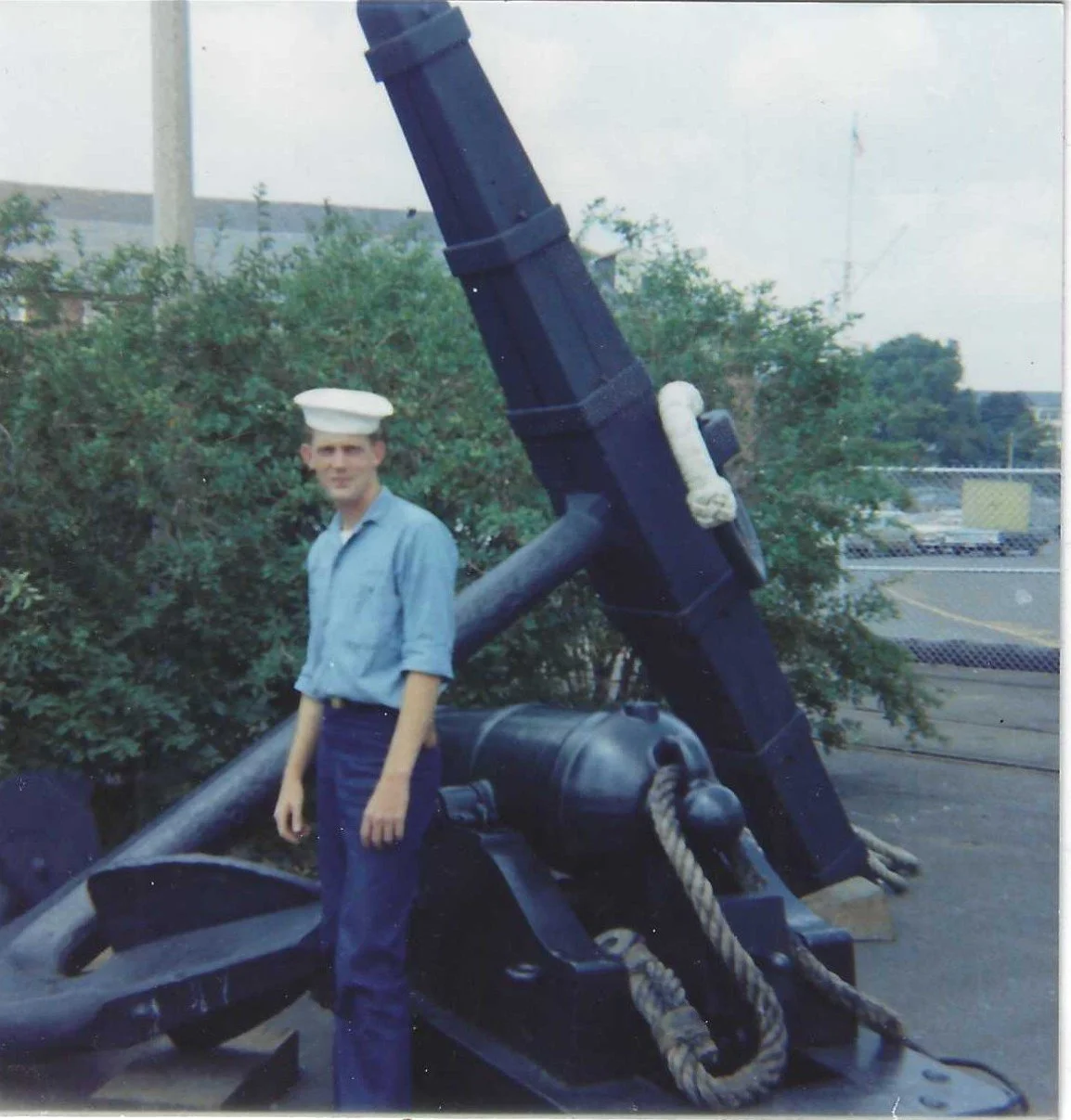
Pictured here is Lindsey. What a stand-up guy I have been able to help. As you can tell, he is a proud sailor (taken some time between 1967 and 1970). The type of guy you wouldn’t mind bunking with while underway. To say he has seen some stuff is an understatement. Vietnam Service Medal with One Bronze Star. Republic of Vietnam Campaign Medal with Device. Poor SOB. He had to see some things to get those pinned on. Lindsey came to me already at 100%. The PTSD was getting worse. The memory was fading. Fresh in hand was a caregiver denial. But, not anymore. Lindsey got the last laugh out of the VA.
Keeping Folks Home
Congress got together some years back. While I am sure at some point they talked about keeping each other rich, they also talked about trying to save a little dough for the VA. You see, the VA and government finally figured it out—it is easier to pay Lindsey’s wife a few bucks a month than it is to put this joker in a nursing home at the government’s expense. What came out was the VA Program of Comprehensive Assistance for Family Caregivers (“PCAFC”). It is pretty simple. If you are getting help from someone to keep you home, VA will pay that person, provide them training, and even give respite care hours, which can be a Godsend for your wife when she needs to get your butt in the shower and those grab bars are coming out the drywall.
Now Lindsey was a smart cookie. He had recently hired an attorney who helped get him to 100%. Sadly, though, 95% of folks like me who do this for a living are clueless about that mysterious Special Monthly Compensation or PCAFC. So, once you get to 100%, they drop you like they did Phil—like a hot potato. Come on guy, we got you to 100%, there’s no more meat on the bone, for you or I. You can’t get any more cash out the VA. Thankfully, myself and my good buddy Alex Graham make a living showing how that just ain’t all she wrote. So, about two years ago, Lindsey starts doing some research, looking for someone to help him with that PCAFC denial. No one would take him. He’d called about 10 attorneys. “You’re already at 100%, no money to be made guy.”
End of the Line?
Lindsey finally gets ahold of me and we started the paperwork for the D-Day invasion. VA sure was gonna hate this one. First thing I did when I got ahold of Lindsey’s files is pull up his PTSD exam. Lindsey, this thing has more boxes checked than a care salesman—your check engine light was permanently enabled. Why haven’t you filed for aid and attendance? What’s that? Never heard of it. So, we got all the paperwork together for that. In true VA fashion, they gave him aid and attendance, but forgot the 1/2 step bump, and made it effective—you guessed it—the date we said “what gives?”
Now Lindsey and I are off to the Board. We need that caregiver granted, an earlier effective date, and the L 1/2, please. We go through the whole works, a hearing, etc. It wouldn’t be the VA without a few remands along the way. Lindsey got the L 1/2, but the Judge sent back the effective date and the PCAFC stuff. Now, thankfully, the caregiver got granted. That brough Lindsey’s wife some much needed help, and certainly some much needed rest. Of course, though, there has to be another denial somewhere. On remand, they denied the earlier effective date. So back to the Board we went. Thankfully, this week, the Judge cut a decision—aid and attendance back to when Lindsey was first granted 100%. Hot damn! What’s the moral of the story? Here, I am glad Lindsey didn’t listen to the 10 attorneys he called who said “100% is the end of the line, Jack.” It just isn’t true. There is nothing better than that phone call to Lindsey and his wife, “Lindsey is going to be able to stay home with me now because of you, I can’t thank you enough.” I never get tired of those calls.
Now you know how Lindsey got his last laugh.

Good Start for Veterans
‘Ole Doug Collins is still busy. He has still been talking about that backlog. Uh. I mean what backlog? Its gone, baby! This week, he did a townhall for VA employees. A little birdie was nice enough to share the link with me. Still talking about the backlog reduction, but nothing about the quality. Forget about that, though. The Courts are helping Veterans, and we have two big-daddy decisions this week. Two in one week? Not bad at all.
What Denial: David A. Hamill v. Douglas A. Collins
This one turned out to be a big-daddy that most weren’t expecting. I have talked a lot about the intent of the AMA, what Congress was trying to do. The goal was to make notice of decisions easy to understand for Veterans. So that there would be no doubt as to what the VA granted or denied. Some years ago, before the AMA, the VA attorneys convinced the Courts to create a totally made up doctrine, implicit denial. “The ‘implicit denial’ rule provides that, in certain circumstances, a claim for benefits will be deemed to have been denied, and thus finally adjudicated, even if the [VA] did not expressly address that claim in its decision.” See Adams v. Shinseki, 568 F.3d 956, 961 (Fed. Cir. 2009).
Copy of Federal Circuit’s Decision
In other words, the VA can somehow deny something, even though they never explicitly mentioned it. Here’s a good example. Lindsey goes to a PTSD exam. The examiner says man Lindsey is messed up. He needs his wife to remind him to take his medications, he doesn’t use the stove anymore—he would look outside the kitchen window and think “I better go water the grass,” all while leaving the stove on. He doesn’t drive because of road rage, oh and he forgets where he’s going. Classic aid and attendance. The VA grants Lindsey 100%, but makes zero mention of whether they had considered aid and attendance, even though the exam screams it.
Years later, Lindsey hires me, and we get him aid and attendance, but when asking the VA about the effective date, they say “well we implicitly denied aid and attendance. We told Lindsey he was getting 100%, nothing more, nothing less. No we didn’t per se mention aid and attendance, but any reasonable person would know that aid and attendance had been denied.” Huh? Yeah, it doesn’t make much sense. So, Congress amended 38 U.S.C. § 5104. They added §(b)(1), which requires every VA decision to give the Veteran an “identification of the issues adjudicated.” Now that is pretty clear.
Of course though, the VA didn’t like that. That is where Mr. Hamill comes in. He files some claims and the VA makes a decision. He eventually winds up at the CAVC saying, “but nothing in that decision I got mentioned x, y, or z.” Nope, you’re wrong. Those were implicitly denied. Even though the decision never mentions them, you should have known better. Clearly, VA denied those things that weren’t discussed. Huh? So, the Veteran’s Court turned Mr. Hamill down. Now, in all fairness, Judge Jaquith gave a spitfire dissent talking about the absurdity of it all.
So, Mr. Hamill took a trip to the Federal Circuit who came through clutch for him. The Federal Circuit held that, under the AMA, claims can no longer be implicitly denied and found Congress, when crafting §(b)(1), eliminated the judicially-created implicit denial doctrine when it enacted the AMA. It also held that a Veteran has an appealable decision for a particular issue “only if the decision gives him explicit notice that the issue is being adjudicated and how it is being decided.” Slip op. at 14. The Federal Circuit relied heavily on the crystal clear statutory notice requirements of the AMA in reaching its decision, citing extensive legislative history that emphasizes the requirement of clear and explicit notice. Id. at 10-12. “There really is no room for disagreement. The AMA not only changed the overall structure of the veterans appeals system but deliberately and clearly heightened the notice requirement for VA’s initial decisions beyond what was previously acceptable in the pre-AMA regime.” Id. at 12.
Now that’s a big win for Veterans. One the VA is going to dispise.
Bringing Back Commonsense: Robert L. Cash v. Douglas A. Collins
Now here’s another good one. Under the AMA, there are certain rules on when the Board can and can’t consider certain evidence. Essentially, they consider everything in your file up until the date of the denial. Anything generated after that needs to be “submitted” to the Board for consideration. Let’s say the VA turns you down October 31, 2025. Spooky, I know. So, if you go to your VA doctor two months later who takes a MRI if your back and says oh yeah it is messed up due to service, you have to submit that directly to the Board, or else they won’t consider it in your appeal.
Mr. Cash filed an appeal and talked a lot about evidence that was created after his denial. In other words, evidence the Board couldn’t consider, unless he himself re-submitted it. That’s right, he had to re-submit something the VA already had. Even though he talked about it in his appeal, saying Judge please consider this evidence. We are talking about it right now. I want you to consider it. VA already has it. Consider it. But, because Mr. Cash himself didn’t re-submit it to the Board, the Board said too bad, so sad. We ain’t lookin’ at it!
Copy of Federal Circuit’s Decision
Thankfully, in another win for Veterans, the Federal Circuit said that is ludicrous. He literally told you he wanted you to consider it. You VA already had a copy of it. It makes little sense for him to waste his time and yours by re-submitting evidence you already have—evidence he told you to consider.
Not a bad start for 2026, for Veterans at least.
Godspeed.