Hot Potato, Coming Through, Hot Potato!
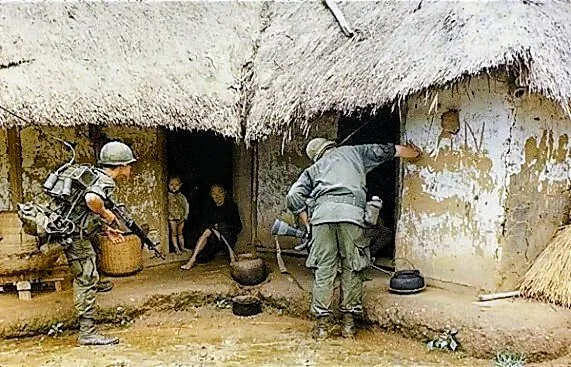
Long time no speak—sorry—I have been tossing a hot potato back and forth for Phil, a good ‘ole Vietnam Veteran. Phil is eat up with the Parkinson’s Disease. He shakes like a leaf from head to toe. Hell. During the hearing, he tried to hold up his hand, shaking back and forth, and the judge just interrupted, “I understand, sir.” Phil was already getting aid and attendance when he came to me, but was missing that sweet SMC (r)(1). You’d think as bad off as he was, it was a done deal. Well. I think you know that the story isn’t so nice and easy.
Monkey Business
I heard this story a few years back—it perfectly sums up what happened to not only Phil, but across the VA every day. So, before we get into the weeds of Phil, here goes a story.
A group of scientists places 5 monkeys in a cage and in the middle, a ladder with bananas on top. Every time a monkey went up the ladder, the scientists would soak the rest of the monkeys with cold water. After a while, every time a monkey went up the ladder, the other monkeys would beat up the one trying to go up the ladder—not wanting to get hit with the cold water. After some time, no monkey would dare go up the ladder, regardless of the temptation.
Scientists then decided to substitute one of the monkeys. Not knowing the consequences, the monkey immediately tried going up the ladder, eying a bright yellow banana. Of course, the other monkeys stopped him dead in his tracks. After several attempts, the new monkey learned that you just don’t climb the ladder, even though he had never seen the cold water.
A second monkey was replaced and the same thing occurred. Even the first substituted monkey joined in on beating up the new monkey—despite never being sprayed with the cold water. A third monkey was substituted. Then a fourth. The same results. Finally, scientist replaced the final original monkey.
What was left was a group of 5 monkeys that had never once been sprayed with the cold water, but nevertheless would beat up any monkey that dared to climb the ladder. If it was possible to ask the monkeys why they would beat up those who dared to climb the ladder, a scientist said the answer would be, “I don’t know. That’s just how things are done around here.” I think this analogy perfectly sums up not just Phil’s journey to SMC (r)(1), but the VA as a whole—that’s just the way things are done around here.

Help Wanted
Phil is no spring chicken. At the time of our Board hearing, he was 83, and the Parkinson’s had gotten abysmal. Damn that Agent Orange can do a number on a body. He went to the VA in November of 2023 after hearing about the all illusive aid and attendance, hoping to get a little bit. The home healthcare bills were piling up, and with total loss of use of his arms and legs, his wife couldn’t lift him on her own anymore. Let alone walk him down the stairs to load him up in the car for a doctor’s appointment. Sure enough, the VA put him through the ringer with a round of exams. After that, wouldn’t you know it, here is your SMC (l). See ya bye! Don’t come back for more. It is a classic VA tactic for SMC. Award the lowest rate possible—hope the Veteran goes away. Maybe even do a proposal to reduce. That’ll show him. Don’t ask for more.
Like most Veterans, Phil was happy at first. Happy he’d been given a little bit extra. Still though, it just wasn’t enough. Home healthcare gets expensive, and what dignity is left with living in a nursing home? Can’t blame Phil. So, he starts doing some research. He eventually gets wind of the mysterious SMC (r)(1) rate and decided to call me up. Thankfully, he did so just in time—we had just a few weeks left to appeal. As soon as he hired me, I filed a Notice of Disagreement, off to see the Judge we were. Because of his age, we were on the rocket docket.

Custer's Last Stand
We got a hearing date shortly after. We went through the whole rigmarole with the judge. Yes, I know Phil is already getting aid and attendance, judge, but here’s how and why he’s entitled to the SMC (r)(1) rate.
Here, you will notice not when time did the judge question whether or not what we were asking for was permissible under the statute. Instead, we got a head nod the whole hearing. Yes Mr. McCauley, I understand what you are asking for and why.
So, Phil and I thought we had this in the bag. Nothing to worry about. Little did we know, when we got the Board decision, it would become Custer’s Last Stand. This is where the VA excels at screwing Veterans. You have a hearing with the judge and it is all warm, fuzzy, hugs and kisses. Of course we can help you! I understand exactly what you are arguing and see how you get there. Don’t sweat it! You see, if you read the hearing transcript, at not a single point in the hearing did the judge go “wait a minute, now. Hold the phone. I don’t think what you are asking for is legally permitted, not matter how bad off Phil is.” Instead, we just got the nod. I understand. This argument makes sense to me. That is, until you read the Board’s decision.
Hot Potato, Hot Potato
So, in true VA fashion, Phil and I got blindsided. Like an old school blindside quarterback sack. Not that new stuff where they hardly hit you. I mean a 350 pound line backer—bam!
Redacted Board Decision—it Can’t be Done!
The Veteran’s representative has argued that the Veteran needs aid and attendance based on more than one service-connected disability. Specifically, he contends that each of the disabilities of the Veteran’s service-connected upper and lower extremities, by themselves, warrants a separate award of SMC(l). See generally November 2024 Hearing Transcript; February 2025 Attorney Brief. In addition, the representative argues that the diagnostic codes for the extremities are different for each condition and in different extremities of the body; therefore, they cannot be considered twice. Id. The Board disagrees.
In this regard, the Board notes that the Veteran’s award of SMC(l) is based on a combination of his service-connected Parkinson’s disease residuals, without distinction. Because the Veteran was awarded aid and attendance based on his Parkinson’s disease, the additional qualifying disability must have resulted from pathology other than that requiring the aid and attendance.
Simply put, he does not qualify for two or more of the rates in (l) through (n), no condition being considered twice in the determination.
Well bless my little heart. This is the first time this issue was brought up. We only had a whole hour long hearing where this was discussed and all we got in return was a head nod in agreement. Whaaaaaattt? Seems a little unfair. Oh well. Off to the CAVC we go.
In keeping with VA tradition, one person’s mess gets passed onto another, like a hot potato. So, the Board was done. They washed their hands of Phil. Once we appealed to the Veteran’s Court, it became the Office of General Counsel’s (OGC) problem. Out of sight, out of mind. So, we’re going back and forth at the Court. We get to the Rule 33 conference, and it is full defense mode. The Board did the right thing. Okay, partner, we’ll draw at high noon, the Honorable Judge Jaquith officiating. As we are both preparing our briefs, mine saying get this man some help, the VA’s saying he’s all good, I kept pestering OGC to settle the case. Finally, after some tense negotiations, I guess a lightbulb finally went off. That’s right, 38 C.F.R. § 3.350(e)(3) “The fact, however, that two separate and distinct entitling disabilities…result from a common etiological agent, for example, one injury or rheumatoid arthritis, will not preclude maximum entitlement.” Hey, those aren’t my words, they are the Secretary’s own words, the guy you work for. So, finally I convinced them to take this hot potato and pass it back to the Board.
Redacted Joint Motion for Remand
With the hot potato out of OGC’s hands, back to the Board we go.

The Cavalry Arrives, Maybe
Hot damn. It is about time. Phil has been e-mailing me that pretty soon they will have to get rid of the house, or put him in a nursing home. Money is running out and his wife just can’t care for him anymore. It took us 6 months at the Court to get the case sent back to the Board. Time was ticking, and not to Phil’s advantage. Thankfully for Phil, the Board didn’t want a second duel. They folded their hand and gave Phil SMC (r)(1). Man! Relief is in sight, right? Success.
Now, as some of you may know, a Board judge doesn’t press the “send payment button.”
Instead, it goes to the regional office who implements the Judge’s decision. That’s where the backpay is calculated, Phil’s new monthly rate is plugged in, and they hit the “send payment” button. Think of it like this, when a judge signs an arrest warrant, he doesn’t go arrest the guy himself. No, that’s what the sheriff’s office is for. The judge gives the arrest warrant to the sheriff and they take care of all that stuff. And, a sheriff can’t refuse to arrest someone a judge has issued a warrant for. Right? Right? Right? The sheriff has to follow the judge’s order. That’s right. You see where this is going. Phil’s hot potato has just been passed off, again.
The BVA Feedback Loop
So, you have a signed order from a Board judge that you have been granted something. That is the end of it, right? No one can undo that. Right? Well, let me introduce you to a little known thing called the BVA Feedback Loop. You see, when the VSOs got together with the VA and Congress to draft the AMA, everyone was complaining about these legally complicated BVA remands. Sometimes, the regional office just didn’t understand what they were supposed to be doing. Notice I said for remands. This was causing the regional office to make mistakes and the case having to go back to the Board, time after time. Hot potato, hot potato. Back and forth. So, Congress came up with the BVA Feedback Loop. A way for the regional office to reach out to the Board and say hey, what exactly are we supposed to be doing here?
As I am sure you have picked up by now, the VA found a way to abuse the system and screw Veterans.
BVA Feedback Loop Internal Document
You see, the law Congress created only allows VA to seek clarification for Board remands, not a Board grant of benefits…like Phil’s SMC (r)(1). The regional office is just supposed to hit the pay button ASAP. Instead, the VA has found a way to abuse the law, as illustrated in the internal document, by asking the Board to “reconsider” decisions that help Veterans. According to this document, the regional office sought clarification form the Board on 186 decisions in 2024. “OAR identified 6 of the 47 requests for clarification are specific to other types of SMC, to include aid & attendance and loss of use. OAR non-concurred with 3 of 6 of these requests for clarification, and the Board non-concurred with the remaining 1 of 3 of the clarification requests. Furthermore, OAR identified no notable trends within the categories of entitlement and SMC.”
That means OAR, or, the Office of Administrative Review, said they don’t think they have to follow a judge’s order in 3 of the 6 decisions they reviewed. Instead, referring them to the Board. The Board non-concurred with 1 of the request, meaning the Board said what part don’t you understand about pay the man! But what about the other two cases? Did the Board totally change their decision, to the detriment of the Veteran? At this point, I honestly don’t know, but I do have a pending FOIA.
Why does all this matter? You see, Phil got his decision from the judge granting SMC (r)(1) in November. Signed, sealed, delivered. But, months later, no dough. What gives? Phil has been caught up in the VBA Feedback Loop.
By this time, Phil was understandably getting antsy. Wondering what the hold up is? Turns out, some bureaucrat, who is not a judge, not an attorney, had been whispering in the Board’s ear that they were wrong.
Finally, the Board’s decision goes on to establish entitlement to SMC O on the basis that the Veteran qualifies for two awards of aid and attendance. With regard to establishing entitlement to SMC O (and in turn SMC R1), the plain language of 38 CFR 3.350(e)(3) states, “Under no circumstances will the combination of ‘being permanently bedridden’ and ‘being so helpless as to require regular aid and attendance’ without separate and distinct anatomical loss, or loss of use, of two extremities, or blindness, be taken as entitling to the maximum benefit.” Thus, two grants of SMC L, both based on a finding of the need for aid and attendance, cannot establish entitlement to SMC O per the statute.
Considering these findings, Compensation Service recommends a referral of the claim back to BVA for further review of the November 18, 2025, decision. As it stands, Compensation Service does not have a further recommendation on how to implement the Board’s decision given the prohibitions in the law.
I always tell people, never say you’ve seen it all when it comes to the VA. Just wait 5 minutes. What foolishness will they think of next? So. There you have it. Some employee hiding behind a wall of anonymity has said he knows best. He knows better than a judge with a law degree. Hell, he knows better than the Office of General Counsel who finally realized the Board’s error and sent the case back to the Board. So, next time you get a decision from the Board…don’t think it is a done deal. If you think I was just going to let this play out, you have another thing coming. First, I e-mailed this joker who wrote the memo (I figured out who it was) a little bit about how our government works. Things like higher courts and such. Just basic high school civics.
After raising some more hell behind the scenes, I am thankful to say that on January 12, 2026, the VA finally hit the pay button for Phil. It was just in time, too.

Sunshine and Rainbows
Phil couldn’t be happier, all sunshine and rainbows for him. But, what about you? What happens when the hot potato gets passed along, but this time it has your name on it? The statute is clear. Hell, our system of government is clear. You may disagree with superior courts or tribunals, but you may not disregard their orders. Instead of honoring that, the VA has created a backdoor to try and screw Veterans. Maybe something you might want to consider letting your Congressman know about.
Alright. Now for something cool.
104-Year-Old WWII Veteran Dominick Critelli Performs National Anthem
Man, for 104, this guy has pretty good lungs.
Godspeed.